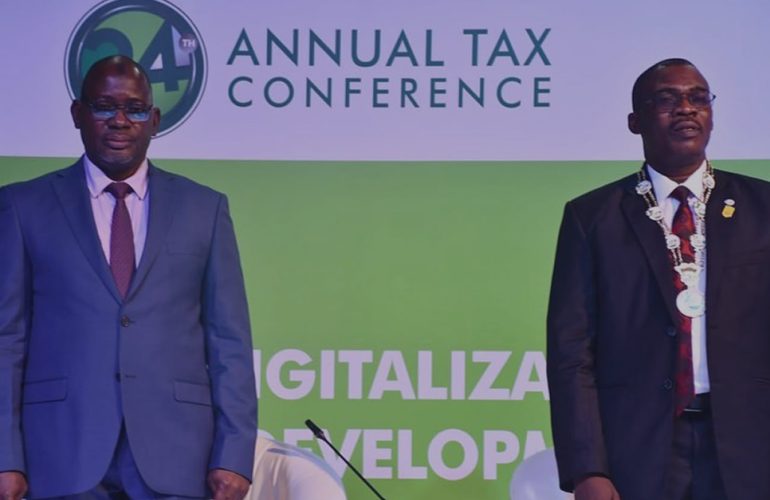
Nigeria can’t attain economic growth without citizens paying taxes as and when due, the Federal Government has submitted.
Vice President Yemi Osinbajo gave the submission, yesterday while declaring open the 24th tax conference of the Chartered Institute of Taxation of Nigeria (CITN) in Abuja.
Represented by Executive Chairman of Federal Inland Revenue Service (FIRS), Muhammad Nami, Osinbajo said the present administration had realised that without prompt payment of their taxes, it would be difficult for the government to meet its obligations.
His words: “Previous administrations had depended almost wholly on oil for revenue, but when we came in, based on the lessons we learnt from the recent market trends that crude oil, like other commodities, is not a sustainable source of government revenue, we have shifted attention to tax.
“What we have learnt is that if we must make progress as a nation, all of us must pay our taxes for the sake of national development to foster harmony and economic growth.”
The Vice President said every Nigerian must be prepared not just to pay their taxes, but also to ensure that others do the same.
He observed that the theme of the conference, “Global Disruption, Taxation and Digitalisation: Implications For Socio-economic Development,” captures the prevailing realities within the national and global spaces.
Osinbajo continued: “Nigeria’s economy is fast digitalising. This means that the way and manner of doing business have changed. Indeed the radical change is brought about by digitalisation, which has made useless the traditional approach to tax administration.
“The digitalisation of tax administration is unavoidable, that is why our government has continued to heavily invest in the automation of tax administrative processes and digital infrastructure.
“It is in the best interest of the country that the government at all levels has enough revenue. The lingering issue of insecurity, crimes and criminality and inadequate social infrastructure can only be addressed if there is adequate revenue in the hand of government.”
He commended the institute for being a critical member of the taxation ecosystem in Nigeria.
“Taxation is a key driver of social harmony, political stability, economic development and growth.
“Your Institute is a pillar for socio-economic development and the emancipation of the down-trodden. It is my belief that your members will continue to discharge their responsibilities of ensuring that the interest of the larger society is not trodden upon, this you must do with patriotic zeal.
“I, therefore, urge you to support government and FIRS in the drive towards full digitalisation of the tax administrative processes. That is why in 2021, the President directed all stakeholders, including MDAs, to support the tax automation drive of the FIRS.
“Therefore I call on the CITN and every Nigerian to comply with tax rules and encourage others to comply and report those not complying so that we can build the Nigeria of our dreams. We must, therefore, take our destiny in our hands,” he appealed.
Earlier in his welcome address, CITN President, Adesina Adedayo, pointed out that the COVID-19 pandemic of 2020 disrupted the global economy yet to be fully addressed by world governments.
Chairman of Tax Conference Committee, Mrs. Ruth Arokoyo, said the conference was packaged to address some salient issues on the application of technology to optimime tax revenue.
Also in an interview with The Guardian, the immediate president of CITN, Dame Gladys Olajumoke, stated: “We need to start interrogating spending by government. We need to make them know that people will voluntarily pay tax if they see what the tax is being used for.”

 Written by adminOct 22nd, 2022